A reality that we are living in an already diverse society should really be pretty self-evident. There are signs of it everywhere we look. People from different places, speaking different languages, eating different foods, wearing different fashions, and wearing their hair in different styles are all pretty obvious, and not the least bit concealed. With today’s global media, seeing images and stories of people that are not like you is almost the default. There is a dizzying array of foreign cultural and language specific broadcast channels, online social media communities, and even multiple language options on most websites and closed captions. Despite so much casual cross-cultural exposure, there remains a lingering framework of “us” and “them” that society has not been able to shake. It is exhausting, and we should do something about those people.
Actually, I should point out that even making such a broad judgement only serves to point out my own prejudice against people who are racist and intolerant. If the irony of the example was missed on your first pass, keep reading. There actually is a growing segment of our society that does see beyond such superficial characteristics as skin color, clothing style, and languages spoken. It is not that they have become totally culture blind, but they have somehow managed to disentangle surface appearances from knee-jerk opinions and associations. The larger truth is that it is easy to accept everyone when each person starts with tacit value.
For a lot of people, this kind of neutral starting ground is not quite yet within their grasp, but it is close. The differences between people remain obvious to see, but it is recognized on an emotional level as something that is much more vast, unrelatable, and unmistakably foreign. Sure, they may have been taught to make polite conversation, but the friendly sentiment gets fumbled by asking judgmental questions or sharing some really slanted opinions in the attempt. They are still learning, and just need a bit more exposure and time spent actively listening. Grace is required with people at this stage of their rising consciousness, and it is worth the effort.
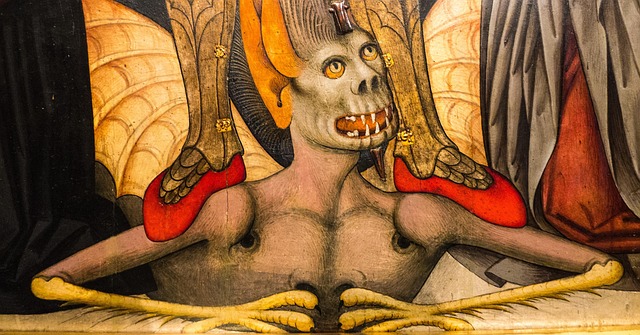
For a few, the gap is simply too great to comprehend and has been loaded with negative stereotypes and scary stories, so fear becomes their default reaction to anything different. Ideas outside of their familiar pocket of society are hard to assimilate, and there is little incentive to even try. Lately, heavily biased media has managed to keep them pacified and content with a very limited global exposure by translating diverse and nuanced ideas into grossly simplified emotions and binary choices, or by explicitly rejecting the relevance or truth of the story. By demonizing everything outside of their little world-view, they end up with enemies literally everywhere. The government is the enemy, the foreigners who live next door were put there by the devil, the black people at work have stolen someone’s jobs, and the folks at that Second Baptist Church are going to a different place than the good folks at their own church. They have come to believe the devil is nipping at their heels everywhere they turn, and it is their job to set the rest of the world right.
This kind of self-identity is defined by simply figuring out who does not belong in your own group, and just excluding and marginalizing them. As more and more groups get pushed outside the fence, it ends up being a very small world indeed. It turns out that such a process of elimination still does not clearly identify those that are “like us” in any meaningful way. Their own identity has become hollow, but this is really difficult to see when you aren’t looking inwardly. Once everyone and everything that is not on your little team is identified, it is a fairly minor task to spin scary narratives and amplify outrage about anything. In this dystopian fantasy, they are the cultural default, and everyone else is out to get them any way they can. This self-imposed victimization is cradled in the fable of being some form of chosen ones, a select few, the only ones who really matter. Everyone wants what they have, so it must be defended from these imagined predators. Obviously, it is very difficult to unwind all of this paranoia, since so much editorial and misinformation needs to be debunked and reframed to dispel it’s seductive grasp. It appears to be much easier to just leave them alone.
Is there a practical method to extracting these victims of misinformation from this morass of lies and warped political views? So far, nobody has found one. Attempting to discredit and fact-check such wild provocations is far too time intensive, and any logical explanation will just get dismissed anyway. This phenomenon demonstrates just how stubborn and sticky emotionally charged information can be, no matter how true it is.
Family members may attempt to reason with this kind of stubbornness using good logic and critical thinking. Unfortunately, those cognitive centers have long since atrophied, are no longer trustworthy, and may not even be readily accessible when operating in an environment of fear. Their logically tangled condition is the result of faulty emotional reasoning to begin with, so it is not reasonable to expect recovery with more reasoning no matter how elegantly it is crafted. There have been reports of young adults using parental controls to limit older family members from accessing such biased media, and pre-setting bookmarks and favorites to less sensationalist reporting and entertainment outlets. But isn’t this the exact same mechanism of demonization and marginalization, only this time turned on conservative ideas themselves, that got us into this mess to begin with?
I propose that turning a spotlight on that hollowness of self-identity might prove to offer useful leverage. Ask them what they personally possess which “those people” are out to get. What valuable work are they actually doing that everyone else covets? What leadership and values are they building in the community that can be so easily seized? Listen to see if these answers are more about what “others like them” have or create. It might expose they they themselves are actually reaping the benefits of society, living on the hard work and taxes of others, benefitting from loopholes in rules, just like the ones being demonized just a minute ago. Understanding an enemy should really bring into focus a clear self-identity, and I have not seen very much of this lately. When I did, it was big trucks with decals and flying flags with someone else’s face on them. This is the kind of emptiness that needs to reflected upon. Everyone who is not like me is an enemy, except for this other guy who is also nothing like me.
In the end, perhaps the most direct way to rebuild relationships is to remind them of who they used to be, or still are in the bigger picture. They are parents, friends, caregivers, and hard workers before the madness set in. Allow the instruments of outrage to fall out of focus, and come back to focusing on the present. Help them find something better to do than watching a blaring squawk box all day. These polarizing issues can be really destructive, rewriting the past and threatening the future. Weaponized issues are often abstract, hypothetical, and mostly imaginary. They are not right here, right now. Turn down the debate, it only feeds the need for conspiracy evidence and the mental gymnastics of thinly veiled justification. By simply meeting it with no response, all the wind leaves the sails. High emotion is required to keep the cycle spinning. Let the provocative statements fall dead, and allow it to rot from irrelevance without the engagement it needs to grow into a monster.
- 0
- 0
- 0
- 0


